
Attic insulation guides
By Insulation Report Editorial. Last reviewed August 2026. How we research this.
In brief
Attic insulation work has an order, and getting it wrong is the most expensive mistake in this trade. Air sealing the ceiling plane comes first, because insulation slows conduction but does nothing about air moving through the gaps around light fittings, the plumbing stack, top plates and the hatch. Baffles at the eaves come second, so new material cannot block the soffit vents that dry the roof deck.
Depth comes third. Doing depth first buries the gaps you needed to reach and the vents you needed to protect. The only way back is to move the insulation you just paid for. These guides walk that order step by step. They show what a good job looks like when it is done. And they split what you can do in a weekend from what really needs a crew.
The sequence, and why it is the whole game
The finished state these guides are aiming at
Sealed, baffled, and evenly covered to the level the climate zone calls for. Every guide in this section is one step on the way to this.
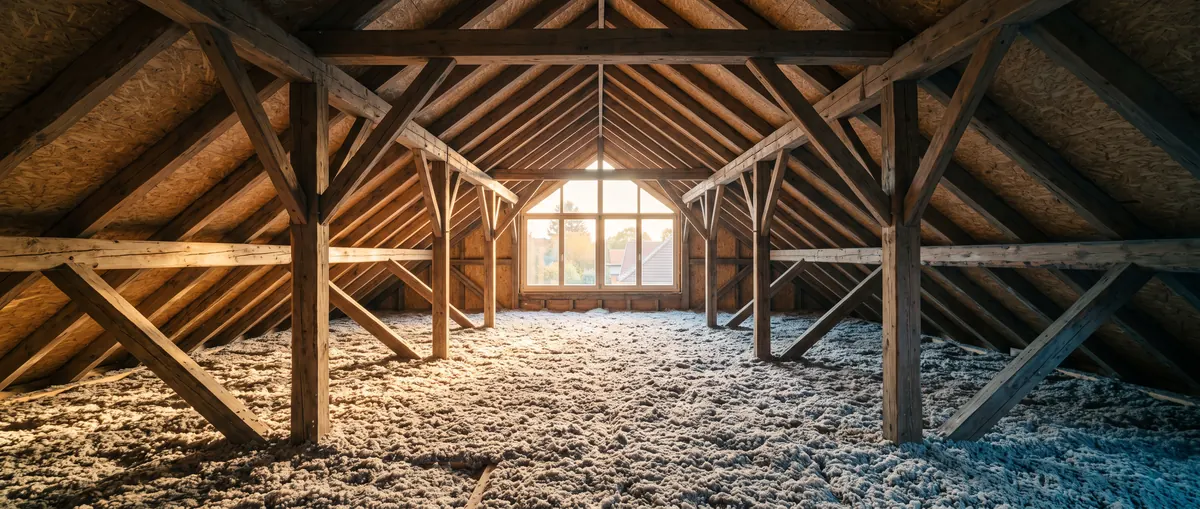
Almost every disappointing attic job is a sequencing failure rather than a materials failure. The material was fine; it went in before the two cheaper steps that make it work.
| Order | Step | Why it goes here |
|---|---|---|
| 1 | Air seal the ceiling plane Cheapest step, and the one with the best return per dollar. | Insulation slows conduction. It does nothing about air moving through gaps around light fittings, the plumbing stack, top plates, chimney chases and the hatch. Insulation laid over an unsealed ceiling underperforms its label, and warm wet air pushed into a cold attic is also where frost and mold problems start. |
| 2 | Fit baffles at the eaves Small materials cost, and near impossible to add later without moving insulation. | Baffles hold a clear channel from the soffit vents up past the insulation. Without them, loose fill drifts into the eaves and blocks the airflow that dries the roof deck. This is the step most commonly skipped, because it is invisible once the depth goes in. |
| 3 | Add depth to the target The biggest line, and the one every quote leads with. | Only now does more insulation buy what it is supposed to buy. Depth over a sealed, baffled ceiling performs close to its label; depth over an unsealed one does not. |
The reason this ordering is worth stating so plainly is that it runs against how the work is sold. Depth is the visible, quotable line. Air sealing and baffles are small, fiddly and easy to leave out of a bid, which makes the cheapest quote the one most likely to skip them.
The rest of this section
Start with whichever question you actually have. Each of these owns one decision and goes deeper on it than this page does.
- Signs you need new insulation: the symptoms that point at the attic, the ones that point somewhere else, and what to measure before assuming.
- How to inspect an attic: surveying an attic of unknown history safely, what each finding means, and when a paid inspection or energy audit earns its money.
- Is attic insulation worth it?: where the return actually comes from, why the first inches do most of the work, and the cases where the payback is genuinely slow.
- How to install attic insulation: the full sequence in detail, the tools, the safety, and how to check the finished job.
- Insulating over existing insulation: how to add a layer without wrecking the one underneath, starting with the vapor facing rule.
- Do it yourself or hire a contractor?: what renting actually saves once equipment, protective gear and disposal are counted, and the situations where hiring is the only sensible answer.
- Ice dams: why the melt line is drawn from inside the house, what to do about water coming in today, and the ranked table of fixes from the roof rake to the actual cure.
- Frost in the attic: frost on the nail tips is house air escaping through the ceiling, and it maps the leaks for you. A diagnostic ladder from "needs nothing" to "hire for air sealing".
- Insulation and your energy bill: what insulation changes and what it does not, why this site publishes no dollar saving, and how to measure the change in your own house instead.
The rest cover the hard cases: odd attic shapes, and the things found buried in the insulation.
- Knee walls: why insulating the short wall alone leaves the room cold, and what the floor, the slope and the flat ceiling behind it each need.
- Cathedral ceilings: why a finished slope rarely holds the level the zone calls for, how the vented and unvented routes differ, and which one the rafter depth points to.
- Room over the garage: why the bonus room runs cold, why the floor is not the main problem, and the fixes ranked by what each is worth.
- The attic hatch: what a bare hatch costs the ceiling, and how to weatherstrip and insulate a scuttle panel, a hinged door or a pull-down stair.
- Recessed lights: how to read the IC label inside a can light, and whether to cover a fixture, swap the housing, or drop the can entirely.
- Knob and tube wiring: how to spot the old wiring in an attic, why covering a live run is a fire question, and the ways out.
- Bath fan venting: how to check whether the fan discharges outdoors, what the moisture does in the attic, and the fix for each case.
The two steps that come before depth
Steps one and two in the table above are big enough to have their own sections rather than a paragraph here.
- Air sealing an attic: the leak inventory in rough order of how much each one leaks, what to seal each with, the flue exception, and how to tell whether it worked.
- Attic ventilation: how much net free area an attic needs, how intake and exhaust split, and why an insulation job is the moment ventilation usually gets broken. Its spokes cover baffles and attic fans.
Before any of it: know your two numbers
Every guide here assumes you know what is on your attic floor now and what your climate zone calls for. Those two numbers decide whether you have a project at all. ENERGY STAR recommends a total of R-30 in zone 1, R-49 in zones 2 and 3 and R-60 in zones 4 through 8, which is most of the country.
- The depth checker turns a measurement into an R-value range.
- The calculator takes your ZIP and floor area and returns the target, the inches, and an installed cost bracket.
You may not need any of this
If your attic measures within about R-10 of the level recommended for your zone, which is this site's estimate rather than a measurement, more depth is a slow payback. Insulation has strongly diminishing returns: the first inches over a bare ceiling do most of the work and the last few repay slowly. In that case the useful project is air sealing on its own, which is step one here and the cheapest line in the whole job. We do not sell insulation and we do not install it, which is why this page can end that way.
When to hire instead
Hiring is the honest answer in a few cases. When the old material has to come out first. When it is, or might be, vermiculite. When headroom is tight, or the space is a knee wall or a cathedral slope. When the wiring is old. Or when the eaves need baffles before anything else happens. And on a big gap across a whole attic, a contractor pays less than store price for material and the machine time is already in the number, so the two routes often end up close.
Get quotes from licensed insulation contractors
If the job needs a crew, tell us what it is and your ZIP. We pass it to a licensed contractor who works in your area.
A marketing service, not a licensed contractor. Insulation work is performed by independent licensed local contractors.
- What does it cost?
- A 1,200 square foot attic blown to R-49 runs about $2,600 to $3,200 installed, from this site's own cost model dated August 2026. Two of its parts are estimates, so read it as a range and not a quote. See the full working and the price by attic size.
- What happens next?
- Your request goes to a licensed insulation contractor near you, usually within about an hour during the day.
Related
Common questions
What order should attic insulation work happen in?
Air sealing first. Baffles at the eaves second. Depth third. Insulation slows heat through material, but it does nothing about air leaking through gaps around light fixtures, the plumbing stack, the tops of walls and the attic hatch. So sealing has to happen while those gaps are still reachable. Baffles keep loose fill out of the soffit vents that dry the roof deck, and you cannot fit them later without moving the material you just paid for. Depth goes last, because it is the step that buries the other two.
Can I insulate my attic myself?
Topping up an open attic you can walk in, with rented blowing gear, is a real do-it-yourself job. And material is most of the cost either way. Hiring is the honest answer when the old material has to come out first, when the attic is a knee wall or a cathedral slope, when headroom is tight, when the wiring is old, or when air sealing and baffles need doing right first. The do-it-yourself guide works through the split, including the cases where renting saves less than it looks like.
Is air sealing really more important than adding insulation?
For most attics that already have some material, yes. Insulation slows heat through material. It does nothing about air moving. So a ceiling full of unsealed holes leaks heat no matter how deep the material above it is. If your attic is close to the level recommended for your zone, sealing is usually the better buy. If the attic is nearly bare, you need both, and sealing still goes first. The gaps are reachable now and buried later.
How do I know if the contractor did it right?
Get the target R-value in writing. Then check three things afterward. Depth should be even across the whole floor, not drifted, with depth markers still showing. Baffles should be in place at every soffit bay, holding an open channel. And the hatch should be insulated and weatherstripped, because it is a hole in the middle of the job. A quote that never mentions air sealing or baffles is pricing a different, cheaper job than the one you want.
Which of these guides do I need?
Start from the question you actually have. If you are not sure there is a project at all, the signs guide and the inspection guide tell you what to look for and what each finding means. If you know the attic is short and want to know whether the spend is justified, the worth-it guide covers where the return comes from. If you have decided to go ahead, the install guide covers the sequence and the add-over guide covers laying a new layer on an old one without wrecking it. The DIY guide is for deciding who does the work.