
Is attic insulation worth it?
By Insulation Report Editorial. Last reviewed August 2026. How we research this.
In brief
It depends almost entirely on where you are starting. And the reason is math, not opinion. Heat flowing through a ceiling drops as 1 over R. So every R-value you add takes away a smaller slice of what is left. Going from R-11 to R-30 cuts that heat loss by about 63 percent.
Going from R-38 to R-49 cuts it by about 22 percent. And R-49 to R-60 cuts it by about 18 percent of a number that is already small. So a shallow attic is where added depth does the most.
An attic already near its recommended level is where it does the least, and sealing the ceiling usually beats it there. This page gives you no dollar saving and no payback period. An honest one would need your fuel price, your climate and your equipment. No attic measurement gives you that on its own.
Why the first inches matter and the last ones do not
R-value measures how well something slows heat moving through it. The heat crossing an insulated ceiling drops as 1 over R. That one relationship explains the whole shape of this decision. Every column below is worked out from that definition. None of it comes from a survey.
| Step | Cut in conductive flow through the ceiling |
|---|---|
| R-11 to R-19 | about 42 percent |
| R-19 to R-30 | about 37 percent |
| R-30 to R-38 | about 21 percent |
| R-38 to R-49 | about 22 percent |
| R-49 to R-60 | about 18 percent |
Read down the right-hand column and the argument makes itself. The early steps are transformative and the late ones are marginal, and every step costs roughly the same per inch of material. That is why the honest answer to this question is a question back: what have you got now?
One important limit on that table. It describes conduction through the insulated plane only. It is not a prediction of a bill. Real energy use also turns on air leakage, which is often the larger term, on thermal bridging through the joists, on ducts in the attic, on climate, on fuel price and on how the house is run.
What this site will not tell you
A dollar saving, or a payback period in years. Producing either honestly needs your fuel price, your climate, your equipment, the leakiness of the house and how you run it. This site carries no energy price or degree day data, so it does not publish figures that would need them. Any page that gives you a payback in years from an attic measurement alone has substituted a national average for your house.
One thing does give you a number for your own house: a home energy audit with a blower door test. It measures the air leaking through, which the math above leaves out on purpose.
What it does cost
Here is the trade in real numbers. Take a 1,200 square foot attic that already has three to four inches. ENERGY STAR says to add about R-49 over that. On the Insulation Report Cost Model, August 2026, it runs about $2,600 to $3,200 installed. That is built from the BLS OEWS May 2025 trade wage, plus one named product's published price and coverage.
Two of the inputs behind it are estimates, not measurements: the multiplier for what a worker costs beyond wages, and the crew hours. We label both as estimates everywhere they appear. The material is also priced at store shelf price, and a contractor pays less than that. The cost guide shows the whole method.
The decision, by where you are starting
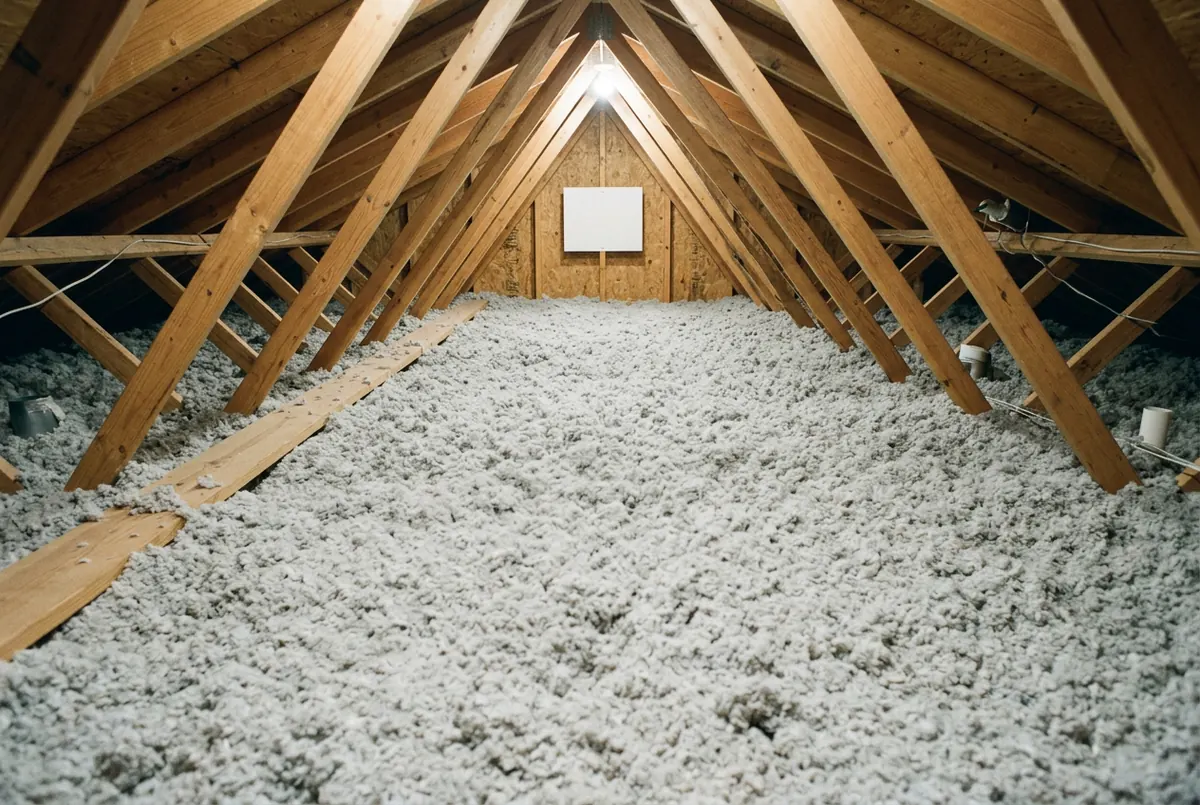
What the money looks like when it is spent well
Even depth, corner to corner, joists buried, nothing crushed. The difference between this and a patchy attic is most of the savings, and none of it is visible from the hatch afterwards.
| Your attic now | Verdict |
|---|---|
| Joist tops visible, or nothing at all up there | Yes, clearly. This is the steep part of the curve, where each added R-value removes the largest share of what is left |
| Roughly half your zone's recommendation | Yes. Still well inside the steep part of the curve |
| Within about R-10 of the recommendation | Probably not. Spend it on air sealing instead. That threshold is this site's estimate, not a measurement |
| At or above the recommendation | No. More depth here is close to inert. Look at air sealing, ducts and ventilation |
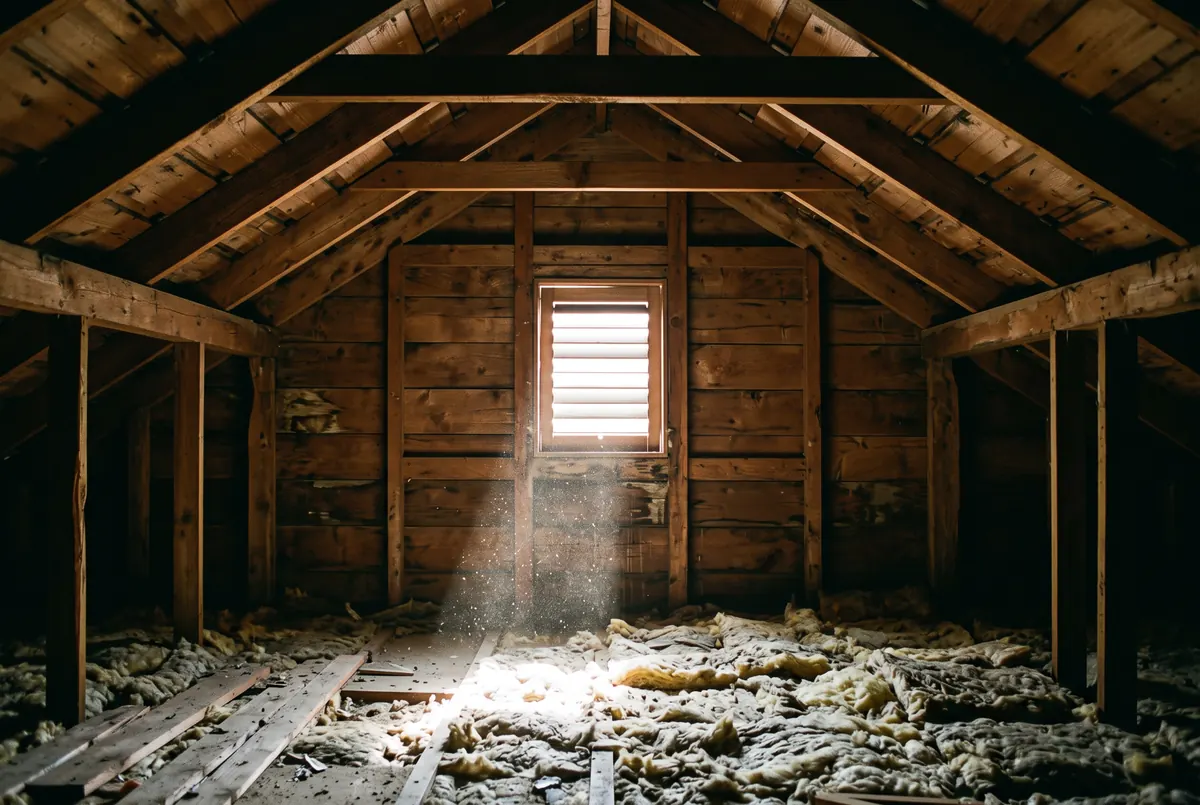
| Contaminated, wet, or possibly vermiculite | Different question. That is a removal and remediation decision, not an energy one |
The depth checker tells you which row you are in, and the calculator puts a cost bracket on closing the gap.
You may not need this
If the table above put you in one of the bottom rows, the useful project is air sealing, not depth. It is cheap in materials, it is the step most often left out of a contractor's bid, and it addresses ice dams and attic frost that extra depth over an unsealed ceiling routinely fails to fix. We do not sell insulation and we do not install it, which is why this page can end on the cheap answer. The install guide lists what to seal, in order of how much each leaks.
When it is worth hiring for
Four cases. When you are in one of the top two rows and the attic is big. When it is hard to get into. When the eaves need baffles before any depth goes in. Or when the honest answer turned out to be removal rather than adding.
Get quotes for attic insulation
If the table came out as yes, tell us the job and your ZIP. We pass it to a licensed contractor who works in your area.
A marketing service, not a licensed contractor. Insulation work is performed by independent licensed local contractors.
- What happens next?
- Your request goes to a licensed insulation contractor near you, usually within about an hour during the day.
Related
The space the money goes into
Everything on this page is about one question: whether closing the gap between what is on this floor and what the climate zone asks for is worth what it costs.
Common questions
Is adding attic insulation actually worth the money?
It depends almost entirely on where you are starting. Heat flowing through the ceiling drops as 1 over R. So going from a nearly bare ceiling to R-30 removes most of the loss. Going from R-38 to R-49 only cuts the rest by about 22 percent, and that is a percent of an already small number. A shallow attic is where added depth does the most work. An attic near its recommended level is where it does the least, and there air sealing usually beats it. What any of that is worth in dollars depends on your fuel price, your climate and how you run the house. We hold none of those.
How much will I save on my energy bill?
We do not publish a dollar figure. A believable one would need your fuel price, your climate, your heating and cooling equipment, how leaky the house is, and how you run it. No honest calculator gets there from an attic measurement alone. What we can tell you is the physics: heat flow drops as 1 over R. To get a number for your own house, get a home energy audit with a blower door test. It will also find the air leaks, which usually matter more than the depth.
What is the payback period on attic insulation?
Honestly, payback depends on the same missing pieces as the savings. So any single number you see quoted is a national average standing in for your house. What you can rely on is the shape of it. Payback is fastest when you start shallow, and it gets slower with every step up, because each added R-value removes a smaller slice of what is left. If you are near your zone target, the payback on that last step is so long that air sealing is almost always the better use of the money.
Is insulation worth it if I am selling the house soon?
Treat it as two questions. First, as an investment: if you are selling soon, topping up an attic already close to target rarely pays back before you leave. Second, as a condition problem: it can still matter. A home inspection that flags visible joist tops, fouled material or blocked soffit vents turns into a bargaining chip. Contamination and moisture are worth fixing before a sale no matter what the energy math says.
Is air sealing better value than adding insulation?
For an attic already near its recommended depth, usually yes, and by a wide margin. Insulation slows heat through material. It does almost nothing about air moving through gaps around light fixtures, the plumbing stack, the tops of walls and the hatch. Sealing costs little in materials. It also helps with ice dams and attic frost, which extra depth over an unsealed ceiling often fails to fix. On a nearly bare attic you want both. Sealing still goes first, because the gaps are reachable now and buried later.
Does more insulation ever make things worse?
Depth itself does not. A bad install can. Loose fill blown into the eaves without baffles blocks the soffit vents that keep the roof deck dry. That is how a well-insulated attic ends up with damp sheathing. Material piled against a recessed light not rated to touch insulation is a fire question. And a vapor facing buried between two layers can trap water where it condenses. All three are mistakes in order of work or workmanship. None is an argument against insulation.