
Vermiculite insulation and asbestos
By Insulation Report Editorial. Last reviewed August 2026. How we research this.
If you think you have vermiculite in your attic, stop and leave it alone. Do not sweep it. Do not vacuum it. Do not move boxes through it. Do not take a sample. This page explains why leaving it alone is usually the right move, not a way of putting the job off.
In brief
Vermiculite insulation looks like loose pebbles about the size of a grain of rice. The color runs from gray-brown to a silver-gold flake. It was poured between the joists, so it lies flat instead of sitting up in a fluffy mat. Much of what was sold in the United States came from a mine near Libby, Montana.
That mine was contaminated with amphibole asbestos. Most of it was sold under the brand name Zonolite. The EPA tells homeowners to assume their vermiculite has asbestos in it, because you cannot tell by looking. Here is the part that surprises people. The first step is usually to leave it alone, not to take it out.
Asbestos hurts you when its fibers get into the air. Material sitting still in a closed attic is mostly not doing that. Disturbing it is what puts fibers in the air. Testing and removal are a licensed trade of their own. An insulation contractor is the wrong call here.
How to recognize it without touching it
Figure 1
What loose vermiculite looks like
Small, light flakes that look layered, with a gold-to-brown shine. In an attic it lies flat between the joists instead of sitting up like a fluffy blanket, and the pieces glitter when light hits them.
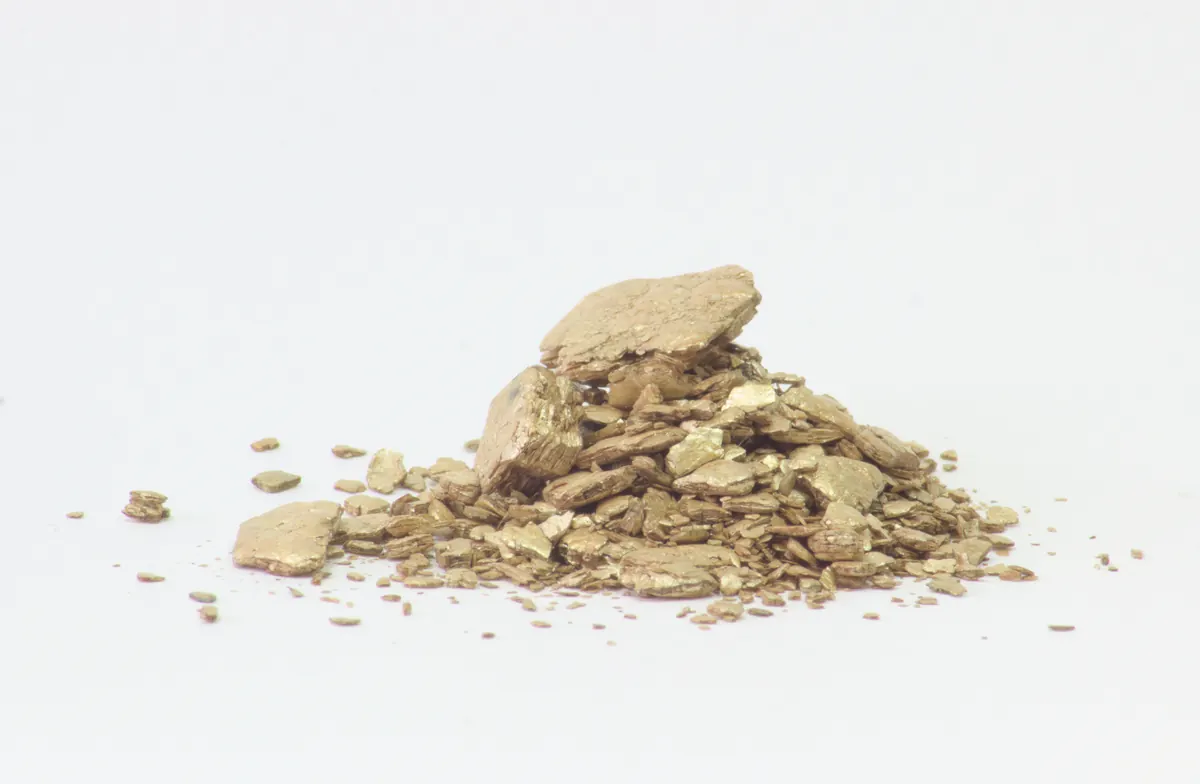
You can spot vermiculite from the hatch with a flashlight. You do not have to go in.
| Material | What it looks like | Concern |
|---|---|---|
| Vermiculite | Loose pebbles about the size of a grain of rice. Gray-brown, or silver-gold with a layered flake. Pours and settles flat. Feels heavy | Assume asbestos. Do not disturb |
| Fiberglass loose fill | Fluffy and very light. Pink, yellow or white. Feels like cotton candy | Irritant, not asbestos |
| Cellulose | Gray-brown shredded paper, packed down and matted. You can sometimes see bits of newsprint | Irritant, not asbestos |
| Mineral wool | Packed and wiry. Gray or brown, sometimes with a faint shine | Itchy. Older material is sometimes worth having a pro look at |
| Fiberglass batts | Rolls or rectangles, pink or yellow. Often has paper or foil on one side | Irritant, not asbestos |
Vermiculite is the only one on this list that changes what you do next. If you see pebbles rather than fibers or shredded paper, treat it as vermiculite until a qualified pro tells you otherwise.
Why "leave it alone" is the standard advice
For every other damaged insulation problem on this site, the answer is to take the old material out. Vermiculite flips that. The reason is worth knowing, not just following.
Asbestos hurts you when you breathe in its fibers. They are far too small to see. Material sitting still in a closed attic is mostly not putting those fibers into your air. But sweep it, run a normal vacuum over it, walk through it or scoop it into a bag, and the fibers lift into the air. From there they can drift down into your rooms through the same holes in the ceiling that leak air.
EPA guidance for homeowners who have or suspect vermiculite insulation:
- Leave it alone. Do not go into the attic unless you have a real reason.
- Do not store things in that attic. Getting them back out stirs up the material.
- Do not let children play in the attic.
- Do not attempt to remove it yourself.
- Seal the gaps around the attic hatch, light fixtures and any other holes in the ceiling. Then if the material does get stirred up, less of it can reach the rooms below.
- If a remodel or any other job will disturb the attic, hire trained and approved pros before that work starts.
When removal does become necessary
Leaving it alone stops being the answer when something has to disturb the attic:
- Roof work, rewiring, plumbing or heating and cooling work that needs access
- A remodel that opens the ceiling
- Material that is already disturbed and spilling into the living space
- A sale or a refinance that calls for a pro to check the attic
- Water damage that has already soaked the attic floor
In every one of those, the work is asbestos abatement. That is a licensed trade of its own, separate from insulation work, and the rules change by state. If a regular insulation contractor offers to "just vacuum it out," stop and call someone else. Nothing else on this page is a clearer warning sign.
What professional abatement involves
- A check and a sample, taken by a trained pro and sent to an approved lab.
- Notice and permits, where your state or town asks for them.
- Sealing off the space. The work area is closed in, and air is pulled out through a HEPA filter so fibers cannot drift into the house.
- Careful removal by workers wearing breathing gear, into sealed and labeled containers.
- Disposal at a site licensed to take asbestos waste.
- An air test afterward, to prove the space is safe to use again.
That is why the price runs into thousands instead of the per square foot rates of ordinary insulation removal, and why it is quoted as one whole job.
Finding the right professional
States write their own asbestos rules, and they are not the same. Start with your state list of licensed asbestos removal contractors. Your state health or environment agency usually publishes one. Ask any contractor for a current license number before they come out.
We do not match homeowners with contractors for asbestos work, and this page has no quote form. Insulation contractors are not asbestos removal contractors. Sending a possible vermiculite job to one would be the wrong result for you. Use your state's licensed list instead.
Say a pro checks and finds that what you have is not vermiculite. Or the vermiculite is safely gone. Then the rest of this section applies again: attic insulation removal and whether to remove or add over.
Common questions
What does vermiculite insulation look like?
Loose pebbles about the size of a grain of rice. It was poured in, not rolled out or blown into a fluffy mat. Colors run from gray-brown to a silver-gold flake that looks layered, a bit like a tiny accordion. It pours and settles flat instead of clumping, and it feels much heavier than fiberglass. It looks nothing like pink or yellow fiberglass batts, or like gray shredded-paper cellulose.
Does all vermiculite insulation contain asbestos?
No. But the EPA tells homeowners to assume theirs does. Much of the vermiculite sold in the United States came from one mine near Libby, Montana. That mine was contaminated with amphibole asbestos. Most of it was sold under the Zonolite brand. You cannot tell clean material from contaminated material by looking at it.
Should I remove vermiculite insulation?
Usually not. That is the opposite of the advice for every other kind of bad insulation. The EPA says to leave vermiculite alone. Asbestos is dangerous when its fibers get into the air. Material sitting still in a closed attic is mostly not putting fibers in the air. Stirring it up is what exposes you, even if you were only trying to help.
Can I test vermiculite insulation for asbestos myself?
Taking a sample means stirring up the material, and that is the one thing to avoid. Sometimes a test really is needed, say before you remodel. When it is, a trained asbestos pro should take the sample and send it to an approved lab. Do not scoop a handful into a bag yourself.
Can I add insulation on top of vermiculite instead?
Ask a qualified asbestos pro and check your local rules. Do not decide this from a web page. People do suggest it instead of removal, because it leaves the old material alone. Whether it works for you depends on the shape the vermiculite is in, the shape the attic is in, and whether new material can go in without stirring the old.
How much does vermiculite removal cost?
It is priced as a whole job, not by the square foot. That is because it is licensed removal work. It involves sealing off the space, taking the material out under control, special disposal, and an air test afterward. Published numbers usually run about $3,000 to $8,000, and higher on a big or awkward attic. Rules and prices change from state to state.