
Signs you need new attic insulation
By Insulation Report Editorial. Last reviewed August 2026. How we research this.
In brief
One symptom is nearly always clear. If you can see the tops of the ceiling joists from the hatch, the insulation is shallower than the framing. In blown fiberglass that falls short of every climate zone's recommendation. In cellulose it only reaches the mildest. Everything else on the usual list points somewhere other than depth.
Ice dams and frost on the roof sheathing are air leakage and blocked ventilation before they are R-value. Cold floors point downward, at a crawl space or a garage, not up at the attic. One room that is always cold is usually a single bypassed cavity that a whole-attic top-up will never reach.
A bill that climbed suddenly has a cause with a date, and insulation does not change on its own. Measure the depth before you price anything, because the fix for a real depth problem is a materially bigger job than the fix for an air-sealing problem.
What each symptom actually points at
What too little actually looks like
Not an empty attic: a thin, drifted, gappy one. Bare patches between the joists do more damage than the average depth suggests, because heat takes the easiest route out.
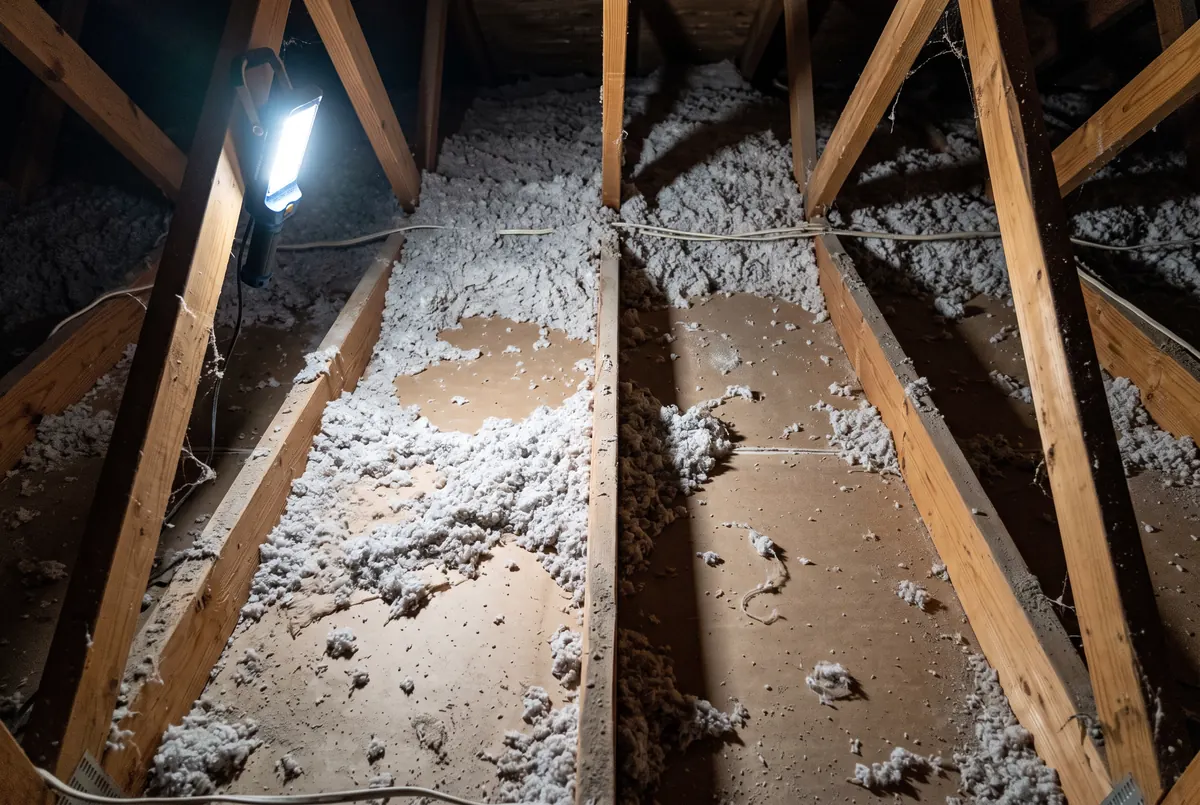
The reason this matters is that the expensive fix and the cheap fix look identical from the living room. Depth is the expensive one and it is what gets quoted; air sealing is the cheap one and it is what most of these symptoms are actually asking for.
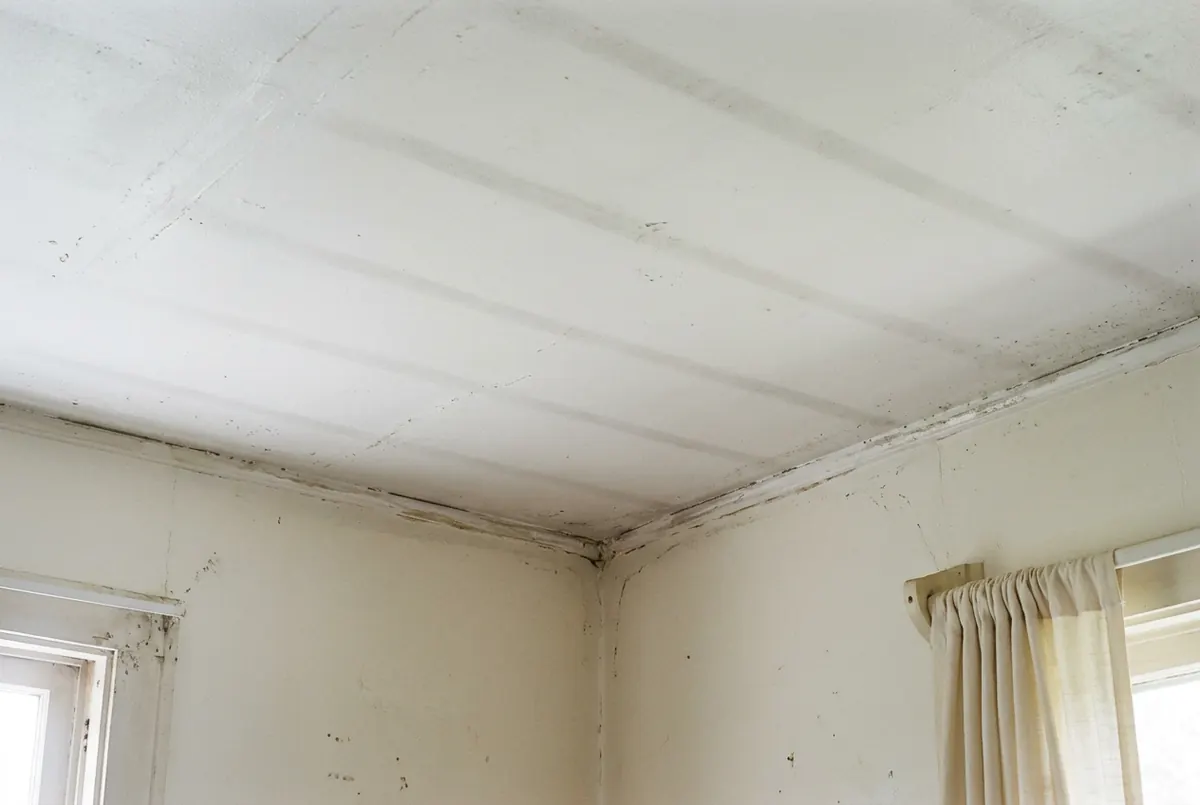
Stripes on the ceiling are a map of the framing
Dust settles fastest where the ceiling is coldest, so the joists print themselves onto the paint. It reads as a cleaning problem and is almost always an insulation and air leakage one.
| What you notice | Most likely cause | What to do |
|---|---|---|
| Ice dams at the eaves in winter Heat escaping into the attic, melting snow that refreezes at the cold overhang | Air leakage first, then depth, then blocked soffit ventilation | Seal the ceiling plane, check the baffles, then add depth. Depth alone often fails to fix it |
| Frost or damp on the underside of the roof sheathing Warm moist indoor air reaching a cold deck | Air leakage and blocked ventilation, not insufficient R-value | Seal, then confirm soffit vents are clear. Adding depth over the leak makes it worse |
| Rooms over a garage or bay window always cold A specific uninsulated or bypassed cavity | A missing or displaced section, not a whole-attic shortfall | Find the cavity. A whole-attic top-up will not reach it |
| Upstairs much hotter than downstairs in summer Attic heat gain, often via ducts in the attic | Depth, plus duct location and leakage | Depth helps. If the ducts are in the attic, they are usually the larger term |
| The heating bill climbed with no change in habits Something changed, and insulation rarely changes on its own | Usually equipment, a leak, or displaced material after attic work | Look for a cause with a date before assuming depth |
| You can see the tops of the ceiling joists Genuinely shallow insulation | Depth. This is the one symptom that is unambiguous | Measure, then add. This is a real depth problem |
The two-minute check that settles it
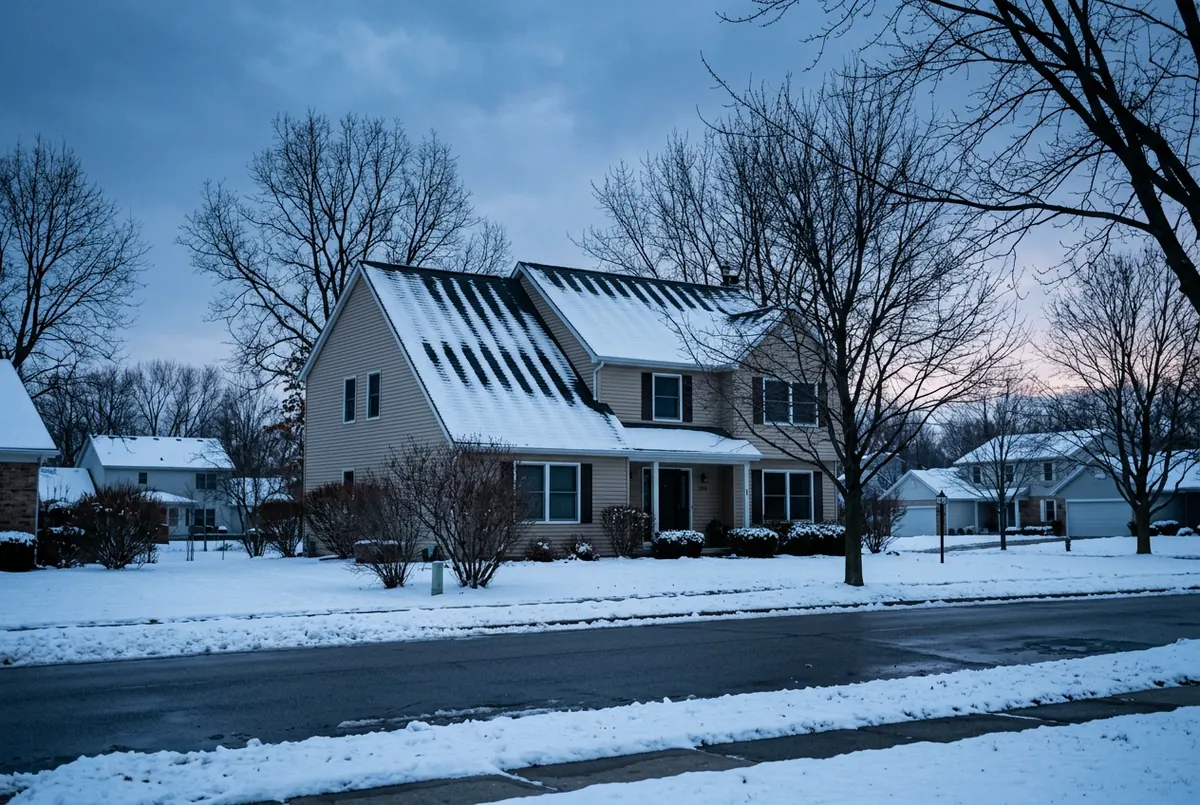
The free version of a thermal camera
A light snow that melts in stripes is showing you where heat is leaving. An evenly covered roof after a cold night is the single cheapest piece of good news about an attic.
Open the hatch and look across the floor with a torch. You are answering one question: is the material above or below the tops of the joists?
- Joist tops clearly visible. The material is shallower than the framing. Ceiling joists are dressed under the American Softwood Lumber Standard PS 20 to 5.5 inches for a 2x6, 7.25 inches for a 2x8, 9.25 inches for a 2x10, so even the deepest of those filled flush is roughly R-20 to R-24 in blown fiberglass. Every climate zone recommends more, and zones 4 through 8 recommend R-60. Which material it is decides how short you are: the inspection guide prices the same three joist depths in two materials and reaches a verdict for each.
- Material level with the joists. You are at joist depth. Probably short, worth measuring properly.
- Joists buried and not visible. You may already be close to target. Measure before spending anything, because this is the case where the answer is often no.
The depth checker turns a tape measurement into an R-value range and compares it with the level recommended for your ZIP.
Signs the material has to come out, not be topped up
These are different from a depth shortfall, and they change the job from adding to removing. Removal is a bigger, dirtier and more expensive job, which is why it is worth being sure.
- Rodent droppings, nesting, or a smell that returns when the attic heats. Contaminated material comes out, and the entry points get sealed first, or the new material is contaminated too. See rodent contamination.
- Water staining, damp, or visible mold. Find the water before touching the insulation. Mold in attic insulation covers why testing is usually not step one.
- Loose, pebble-like gray-brown granules. That can be vermiculite, which should be assumed to contain asbestos and left undisturbed. The vermiculite page explains why leaving it alone is usually correct, and it carries no quote form for that reason.
Age is not on that list. Insulation that has stayed dry and undisturbed does not wear out, and there is no age at which it should be replaced as a matter of course. The remove-or-add-over test works the decision through in five steps.
You may not need anything
A real share of people who arrive at this page have an air-sealing problem rather than an insulation problem, and it is much the smaller job. If the joists are buried and a measurement puts you within about R-10 of your zone's recommendation, which is this site's estimate rather than a measurement, more depth is a slow payback. Sealing the ceiling plane is usually the better spend, and it is also the step that fixes ice dams and attic frost when depth alone does not. We do not sell insulation and we do not install it, which is why this page can say so.
When it is worth a contractor
Bring someone in for four things. When the symptoms point at removal rather than depth. When water is involved and you cannot find where it comes from. When the attic is a knee wall or a cathedral slope you cannot inspect. Or when the check above says you are genuinely short across the whole floor, and the job is bigger than a weekend.
Get quotes from licensed insulation contractors
If the check points at real work, tell us what you found and your ZIP. We pass it to a licensed contractor who works in your area.
A marketing service, not a licensed contractor. Insulation work is performed by independent licensed local contractors.
- What does it cost?
- A 1,200 square foot attic blown to R-49 runs about $2,600 to $3,200 installed, from this site's own cost model dated August 2026. Two of its parts are estimates, so read it as a range and not a quote. See the full working and the price by attic size.
- What happens next?
- Your request goes to a licensed insulation contractor near you, usually within about an hour during the day.
Related
Common questions
What are the signs that attic insulation needs replacing?
Replacing is rarer than adding. The signs that material genuinely has to come out are water damage, a musty smell that returns whenever the attic warms, visible mold, rodent droppings or nesting, or loose gray-brown granules that could be vermiculite. Age alone is not a sign: dry, clean insulation that has never been wet does not wear out. Settled material has lost depth rather than quality, and the fix for that is more material over the top, not a tear-out.
Is a cold floor a sign of bad attic insulation?
Usually not. Cold floors point down, not up. Look at an uninsulated crawl space, an unheated basement, or a floor over a garage. Attic insulation works on the ceiling above you. There is one exception: a room where the ceiling is also the roof. A cathedral slope, say, or a room over a garage with a cavity between. There, one missed section can chill the whole room no matter how deep the main attic is.
Do ice dams mean I need more insulation?
They mean heat is reaching the roof deck, which is usually air leakage first and depth second. Warm air escaping through gaps around light fittings, the plumbing stack and the attic hatch melts snow that then refreezes at the cold eave. Blocked soffit vents make it worse by stopping the deck from staying cold. Adding depth over an unsealed, unbaffled ceiling frequently fails to fix ice dams, which is why the sequence matters more than the amount.
How do I know if I have enough insulation without measuring?
Look across the attic floor from the hatch. If you can see the tops of the ceiling joists, the material is shallower than the framing. Under PS 20, joists are dressed to 5.5 inches for a 2x6, 7.25 inches for a 2x8, 9.25 inches for a 2x10. So even the deepest of those, filled flush with blown fiberglass, is only about R-20 to R-24. That falls short in every climate zone. But name the material before you conclude anything. The same depth in blown cellulose is about R-29 to R-35. That reaches zone 1's R-30 at the top of its range, and nothing else. And if the material sits well above the joists so you cannot see them, measure properly before assuming.
Does insulation wear out or need replacing after a certain age?
No. Insulation that stays dry and undisturbed does not degrade with age, and there is no service life after which it should be replaced. What does happen is settling, which reduces depth and therefore total R-value, and mostly happens in the first few years. Damage is the other case: water, compression from stored boxes, and displacement from anyone working in the attic. An old attic is usually under-insulated by the standards of its build date, not by decay.
Should I insulate if my house is comfortable?
Comfort is a fair signal. If nothing feels wrong, the case rests on running cost rather than symptoms. So measure first. Say the attic comes within about R-10 of the level recommended for your zone. (That threshold is our estimate, not a measurement.) Then more depth pays back slowly, and sealing the ceiling is usually the better buy. A comfortable house with visible joist tops is a different story. That one is genuinely short.