
Insulation removal vacuums
By Insulation Report Editorial. Last reviewed August 2026. How we research this.
In brief
An insulation vacuum is a high-volume blower with a large-diameter hose, usually eight inches, that moves loose-fill insulation out of an attic and into disposal bags at the machine. It is not a large shop vac. It is built to move a huge volume of very light material, not a small amount of heavy debris.
And it collects into bags, not a canister that would fill in seconds. Renting one usually costs a day rate in the low to mid hundreds of dollars, plus bags.
The machine stays outside on a truck or trailer, and the hose runs in through a window or a vent. It is a genuine option for dry, uncontaminated material in an accessible attic. It is the wrong tool for suspected vermiculite, rodent droppings or mold, where the containment matters more than the suction.
What the machine is doing
The hose is the job
The machine sits outside and the hose does the work, which is why access and hose reach decide the day more than the horsepower does.
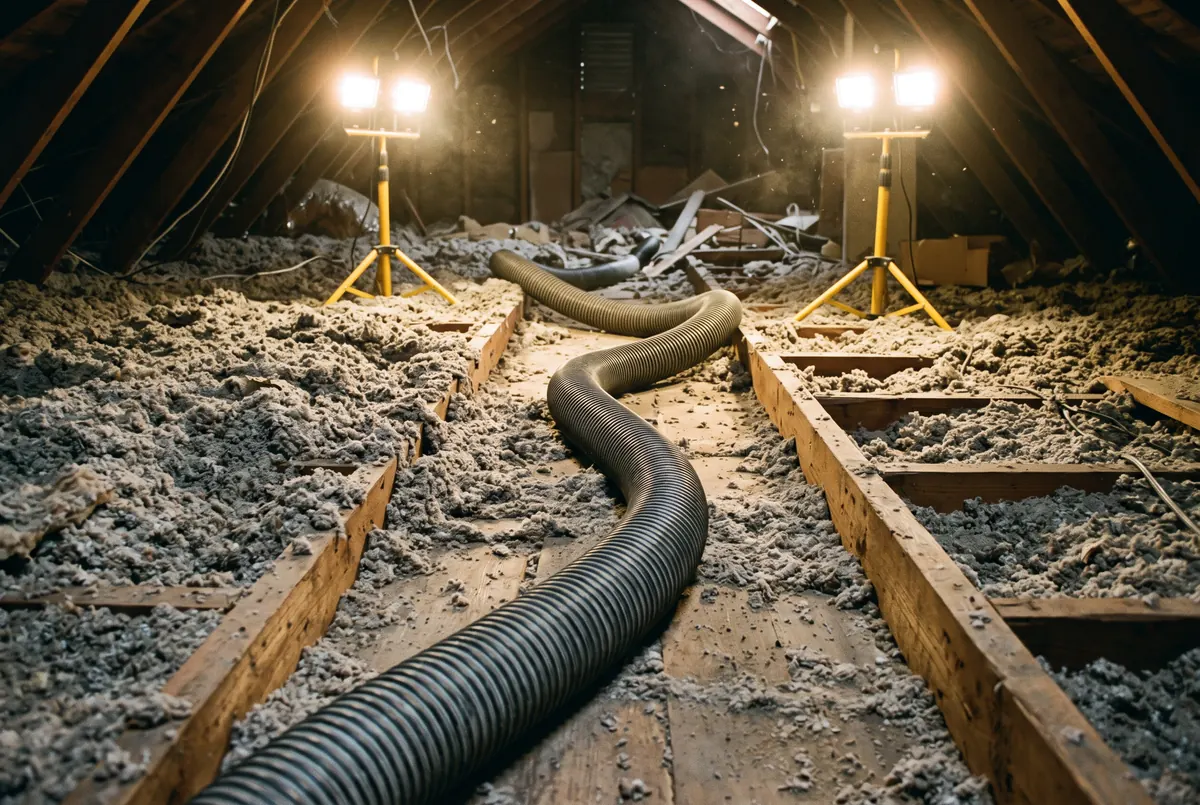
Loose-fill insulation is mostly trapped air. A 1,200 square foot attic with 10 inches of cellulose holds a large volume of material at very low density, which is the opposite of what a workshop vacuum is designed for.
| Shop vacuum | Insulation vacuum | |
|---|---|---|
| Hose diameter | About 1.25 to 2.5 inches | Typically 8 inches |
| Designed for | Small volumes of dense debris | Large volumes of very light material |
| Collection | A canister that fills in seconds | Disposal bags changed at the machine |
| Filter behavior | Clogs almost immediately with fiber dust | Built for continuous fiber loading |
| Placement | Carried into the attic | Stays outside; only the hose goes in |
| Power | Household outlet | Gas engine or heavy electric |
That last row matters for a practical reason: a gas machine has to stay outdoors, so the hose run has to reach from the truck to the far corner of the attic. Long or awkward runs are one of the things that push a contractor quote upward, and they are the same problem for a homeowner.
Renting one: what to confirm before the day
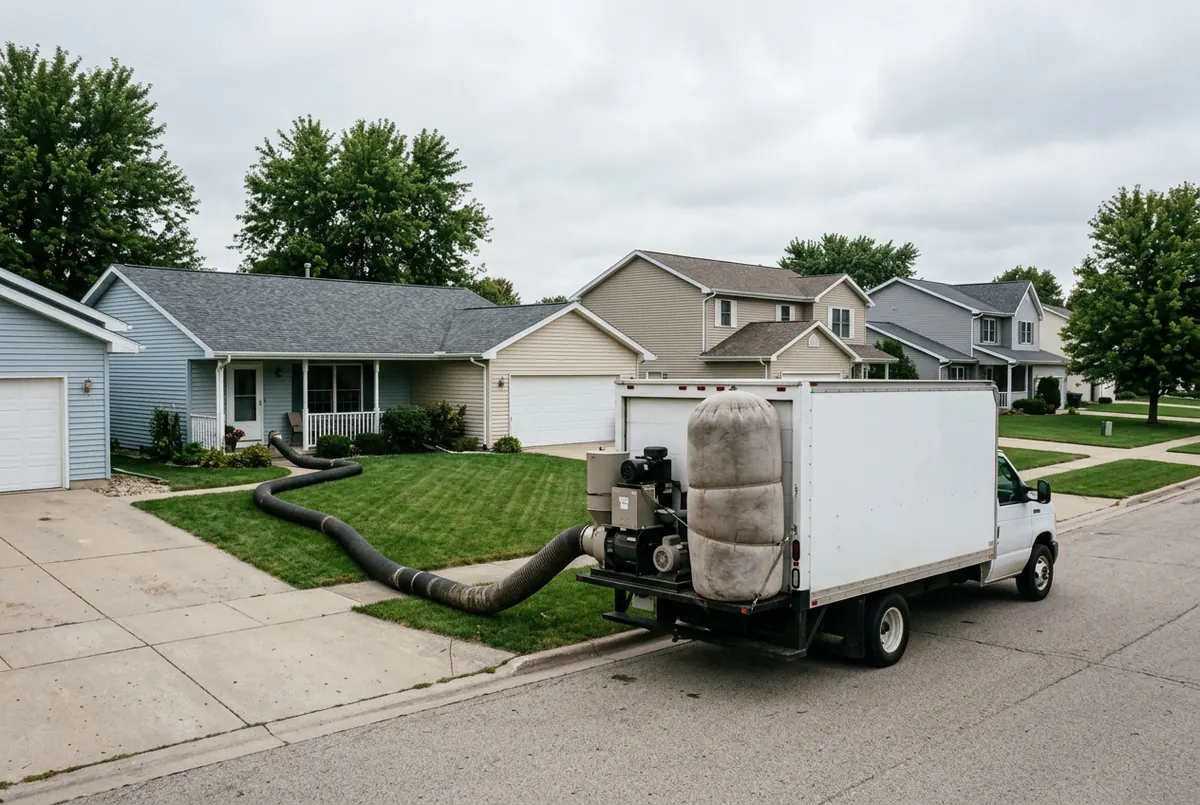
The professional version parks at the curb
A truck-mounted unit keeps the motor, the noise and the collected material outside the house entirely. A rented portable does the same work in stages, into bags you then have to move.
- Total hose length, and whether it reaches from where the machine can stand to the furthest corner of your attic.
- How many bags are included and what extras cost. A full attic uses more than people expect.
- Deposit and day rate, and whether a half day is available.
- Transport. These machines are heavy and usually need a truck or trailer.
- Where the removed material can be taken, and whether that facility charges by volume.
- Whether you have a second person. One in the attic on the hose, one changing bags at the machine. Solo is possible and much slower.
Availability varies considerably by area. Some regions have these at general equipment rental yards; others effectively do not rent them to homeowners at all.
Protective equipment, which is not the place to economize
Insulation Report earns a commission if you buy through some of the product links on this page. It costs you nothing extra and it does not change which products we recommend or what we say about them.
- A fitted respirator, not a nuisance dust mask. Loose-fill removal generates sustained airborne fiber.
- Sealed goggles, not safety glasses, because fiber gets around open sides.
- Disposable coveralls with a hood, plus gloves and taped cuffs. Fiberglass on skin is genuinely miserable.
- Knee pads and a headlamp, since you will be crawling on joists in the dark.
- Boards to kneel and walk on. Stepping between joists puts a foot through the ceiling below, which is the most common self-inflicted cost on this job.
Attics reach extreme temperatures by mid-morning in most of the country. Start early, take breaks, drink water, and do not do this alone.
Is renting actually cheaper than hiring?
Honestly, less often than the labor share suggests. On a 1,200 square foot attic:
Figures: the hire column uses the clean-removal range contractors published in 2026. That is the same basis as the removal cost page. The rental numbers are a rough guide, not quotes. Rates and what is available change by region and by supplier.
| Do it yourself | Hire a crew | |
|---|---|---|
| Machine | Day rate plus bags | Included |
| Protective equipment | Purchased | Included |
| Disposal | Yours to arrange and pay | Usually included or itemized |
| Transport | Truck or trailer needed | Included |
| Time | A long day or two, two people | Four to eight hours |
| Typical all-in | Several hundred dollars plus your weekend | $1,200 to $2,400 |
So the saving is real. But it is a few hundred to a thousand dollars, not the whole quote, and it costs you a hard weekend. Weigh two more things. Some contractors will not warranty new insulation blown over an attic floor they did not prepare. And a crew brings gear to seal the work area off and keep dust out of your rooms, which is hard to rig up yourself.
Do not rent a machine for: anything that might be vermiculite, rodent contamination, or mold. In all three the containment is the job, not the suction.
Prefer to have it done?
Give us the job and your ZIP and we will pass it to a licensed contractor in your area.
A marketing service, not a licensed contractor. Insulation work is performed by independent licensed local contractors.
- What happens next?
- Your request goes to a licensed insulation contractor near you, usually within about an hour during the day.
Common questions
Can I use a shop vac to remove attic insulation?
No, and trying tends to destroy the vacuum. A shop vac has a small hose, a small drum and a filter that clogs almost immediately with insulation dust. Clearing an attic means moving cubic yards of low-density material, which needs a large-diameter hose, a high-volume blower and collection into disposal bags rather than a canister. A shop vac is fine for tidying a small spill, not for a removal job.
How much does it cost to rent an insulation vacuum?
Rental is commonly a day rate in the low-to-mid hundreds of dollars, plus disposal bags, and some suppliers require a deposit. Confirm what is included, because hose length, bags and a second operator to change bags at the machine are all things people discover on the day. Availability varies a lot by area.
How long does it take to vacuum out an attic?
A two-person crew usually clears a 1,000 to 1,500 square foot attic of blown-in insulation in four to eight hours. Working alone, expect a lot longer. One person has to keep switching between the hose in the attic and the bags at the machine.
Where does the removed insulation go?
Into large disposal bags at the machine. The machine usually sits outside on a truck or trailer, with the hose run in through a window or the attic vent. A full attic can fill a lot of bags. And some disposal sites charge by volume rather than weight, so check the disposal cost before you start.
Do I need a vacuum for batt insulation?
No. Batts are rolled or lifted out by hand and bagged, which is why batt removal is usually quoted slightly cheaper than loose fill. A vacuum earns its place with blown-in cellulose or fiberglass, which cannot practically be gathered by hand.