
Do it yourself, or hire a contractor?
By Insulation Report Editorial. Last reviewed August 2026. How we research this.
In brief
Material is most of the bill either way, so the do-it-yourself saving is smaller than it looks. On a 1,200 square foot attic taken to R-49, the material alone runs about $2,100 at retail shelf price, against a modeled installed range of $2,600 to $3,200.
Everything a contractor supplies, labor, machine, insurance, overhead and profit, fits inside a gap of roughly $500 to $1,100, and machine rental, protective equipment and disposal come out of that gap before you have saved a penny. The honest split is not about money for most people. It is about access and sequencing.
An open, walkable attic that has already been sealed and baffled is a genuine weekend job for two people with a rented machine. Low clearance, knee walls, old wiring, contamination or suspected vermiculite are not, at any price. The one piece worth doing yourself in almost every case is the air sealing.
The arithmetic on one attic
What renting actually puts in your garage
The machine is the easy part of the do-it-yourself route. The material, the protective gear and the day itself are where the saving gets smaller than it looks.
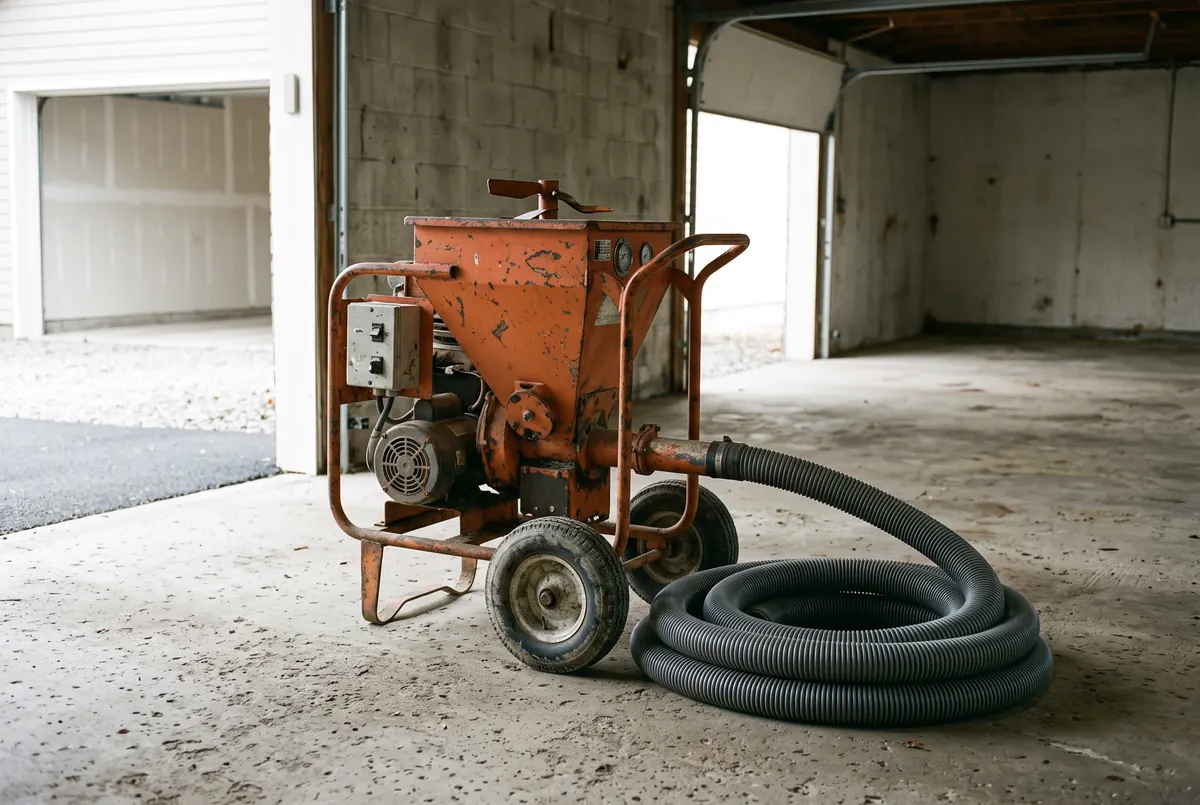
What renting actually puts in your garage
The machine is the easy part of the do-it-yourself route. The material, the protective gear and the day itself are where the saving gets smaller than it looks.
A 1,200 square foot attic that already carries three to four inches, topped up to R-49, which is the ENERGY STAR guidance for zones 4 through 8. Blown fiberglass, no removal, no air sealing bought in.
Figures: Insulation Report Cost Model, August 2026. Wages from BLS OEWS May 2025; material price and coverage from the manufacturer's published chart, read 2026-08-07. The installed range rests on estimated burden and crew-hour inputs, so it is an estimate.
| Line | Amount | Basis |
|---|---|---|
| Material, 31 bags at retail | $2,100 | Published coverage and shelf price for one named product, read 2026-08-07 |
| Installed by a contractor | $2,600 to $3,200 | Insulation Report Cost Model: BLS May 2025 trade wage, a burden multiplier and crew hours |
| The gap you are working for | $500 to $1,100 | Before rental, protective equipment and disposal come out of it |
Two inputs behind that installed figure are estimates, not measurements, and we label them that way everywhere. One is the multiplier on the trade wage, 2 to 3 times, covering what a worker costs beyond pay. The other is crew time of 9 to 12 hours per 1,000 square feet. Material is shown at store shelf price. A contractor pays less than that, which is part of why the gap is narrower than the labor line alone suggests. The installation cost page decomposes the labor side.
What comes out of the gap
The saving is the gap minus everything a contractor was including. This site carries no measured price for any of the following, so it publishes none, but each is real and each is easy to leave out of a plan.
- Machine rental, plus the trip to collect and return it. Some retailers waive the fee above a minimum bag purchase, which is worth asking about because it changes the arithmetic materially.
- A second person. One works the hose in the attic, one feeds the hopper below. This is not a solo job.
- Protective equipment. A fitted respirator, sealed eye protection, gloves, long sleeves, boards to kneel on.
- Disposal of packaging, and of any material you disturb.
- Your time, at roughly 10.8 to 14.4 crew-hours for this attic on the model's estimate, and longer for a first attempt.
The decision that actually matters
For most attics the money is close enough that access and sequencing decide it. Work down the table; the first row that matches is your answer.
| Your attic | Verdict |
|---|---|
| Vermiculite suspected, or rodent, mold or water contamination | Neither, yet. Removal or abatement is a separate trade and comes first |
| Knee walls, cathedral slopes, or clearance you cannot work in | Hire. Access defeats the rental route regardless of the saving |
| Old or unknown wiring, or several fixtures not rated for insulation contact | Hire, or bring in an electrician before anything is covered |
| Eaves unbaffled and ceiling unsealed, and you do not intend to do both | Hire, and require both in writing. Depth alone is the expensive mistake |
| A rebate you want to claim that requires a licensed installer | Hire. Confirm the requirement before renting anything |
| Open, walkable, already sealed and baffled, adding depth only | Do it yourself. This is exactly the case renting exists for |
The half worth doing yourself either way
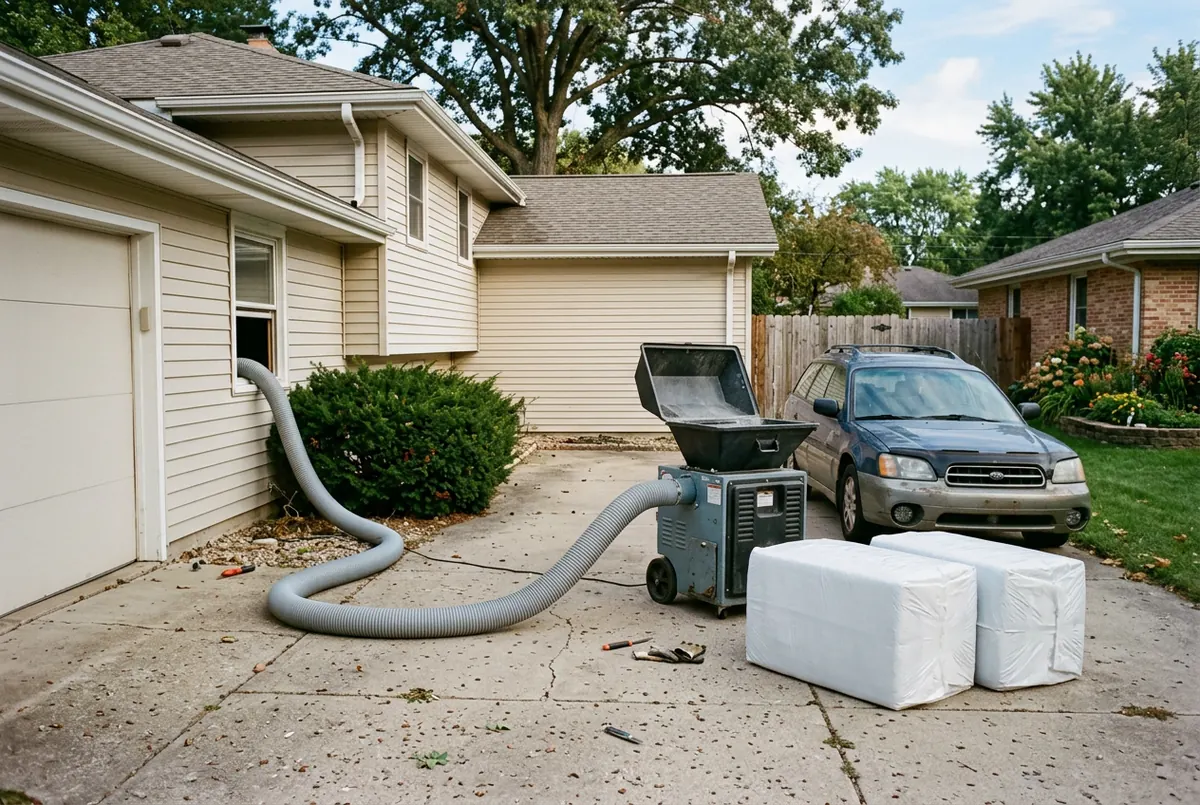
The rental route, at homeowner scale
A machine on the driveway and bags in the garage is a real option on an open, accessible attic. It stops being one the moment the clearance runs out or the wiring is old.
Air sealing is cheap in materials, expensive in labor, and the step contractors most often leave out of a bid. It is also the step with the best return per dollar, because insulation resists conduction and does almost nothing about air moving through a gap. If you are going to hire the depth, sealing the ceiling plane yourself beforehand is the highest-value weekend available in this whole job, and it makes the depth you then pay for perform closer to its label. The install guide lists what to seal, in order of how much each leaks.
The whole materials list for it is short and cheap, which is the point.
Insulation Report earns a commission if you buy through some of the product links on this page. It costs you nothing extra and it does not change which products we recommend or what we say about them.
-
Look for Labeled for windows and doors, or low expansion. The high-expansion kind bows what it fills.
Closes the gaps around plumbing stacks, wiring holes and top plates, which is where most of the air goes.
Skip it if The gap is wider than about three inches, where rigid board plus sealant is the better closure.
-
Look for Explicitly labeled as fire block or fire stop, usually orange. Ordinary foam is not a substitute.
Penetrations that pass between floors are fire paths as well as air paths.
Skip it if Never use ordinary foam where fire blocking is called for, and never use any foam against a flue.
-
High-temperature sealant and sheet metal
Look for Sealant rated for the temperature at a flue, plus aluminum or galvanized flashing you can cut.
The gap around a chimney or metal flue gets closed with metal and high-temperature sealant, holding the clearance the flue listing sets.
Skip it if You cannot identify the appliance, the flue type or the clearance it requires. That penetration is the one to leave to a contractor.
-
Look for Any thickness you can cut cleanly. Foil-faced is easier to tape.
Caps large openings: dropped soffits over cabinets, open wall top plates, chases.
Skip it if Every opening you found is small enough to foam directly.
-
Look for An acrylic latex or siliconized acrylic rated for gaps up to a quarter inch.
The small stuff: ceiling boxes, the perimeter where top plates meet drywall, wiring penetrations.
Skip it if Nothing, if you are sealing at all. It is the cheapest item here.
-
Look for A metal-bodied dispensing gun that takes pro-size cans, with a needle valve you can shut between uses.
A straw can is one-shot: leave it an hour and it sets solid inside. A gun restarts for weeks, meters a thin bead instead of a blurt, and reaches into a joist bay one-handed. Air sealing is dozens of small holes over more than one session, which is exactly the shape of job a straw is worst at.
Skip it if You have four or five holes to seal and will finish in one afternoon. One straw can costs less than the gun and you will not miss it.
-
Look for A retractable blade with spare blades in the handle.
Rigid board is scored and snapped rather than sawn, and a blunt blade tears the foam instead of cutting it. Blades are consumable on foil-faced board.
Skip it if You own one. Almost everybody does, and any of them cuts foam board.
-
Look for Foil, not cloth duct tape. Duct tape fails in an attic within a few summers.
Seams in rigid board, and duct joints you can reach.
Skip it if You are not using board and your ducts are outside the attic.
If the table above came out as do it yourself, the gear page lists the full kit for the blowing itself, machine to respirator, not just the sealing materials.
You may not need either
Measure before you price anything. If your attic is within about R-10 of the level recommended for your zone, which is this site's estimate rather than a measurement, more depth is a slow payback whoever installs it, and the honest project is air sealing on its own. We do not sell insulation and we do not install it, which is why this page can end on that. The depth checker turns a tape measurement into an R-value range in about a minute, and the calculator runs the cost both ways on your own floor area.
Get quotes for attic insulation
If the table came out as hire, tell us the job and your ZIP. We pass it to a licensed contractor who works in your area.
A marketing service, not a licensed contractor. Insulation work is performed by independent licensed local contractors.
- What happens next?
- Your request goes to a licensed insulation contractor near you, usually within about an hour during the day.
Related
Common questions
Is it cheaper to install attic insulation yourself?
Yes, but by less than most people expect. Material is most of the bill either way. Take a 1,200 square foot attic to R-49. The material alone is about $2,100 at store shelf price. The modeled installed range is $2,600 to $3,200. So everything a contractor does, the labor, the equipment, the insurance, the overhead and the profit, fits inside a gap of roughly $500 to $1,100. And machine rental, protective gear and disposal come out of that gap before you have saved a dollar.
How long does it take to insulate an attic yourself?
We model crew time at 9 to 12 crew-hours per 1,000 square feet. That is an estimate from second-hand trade guidance, not a measurement. On a 1,200 square foot attic it comes to about 10.8 to 14.4 crew-hours. A two-person pro crew gets through that in half a day. A first-timer should expect a lot longer, plus picking up and returning the machine. And air sealing beforehand is its own separate session.
Can you rent an insulation blower?
Yes. Rental machines are easy to find, and some stores waive the fee if you buy enough bags. But the machine is only part of the kit. You also need a second person feeding the hopper while you work the hose. A fitted respirator, not a dust mask. Sealed eye protection. Gloves. Boards to kneel on. And a way to get rid of the packaging. We hold no measured rental price, so we do not publish one. Check your local rate before you assume the saving.
When should I definitely hire a professional?
When the old material has to come out first. When it is, or might be, vermiculite. When the attic is a knee wall or a cathedral slope. When there is too little headroom to work in. When the wiring is old, or several light fixtures are not rated to touch insulation. Or when the eaves need baffles and the ceiling needs sealing properly. Those are problems of access, safety and order of work. None of them gets cheaper by renting a machine.
Does doing it myself void anything?
It can change what a contractor will warranty later. Some will not warranty new insulation laid over an attic floor they did not prepare. Some will not top up work they cannot inspect underneath. It can also matter for a utility or state rebate. Several of those require a licensed installer, or an inspection after the work, before they pay. If a rebate is part of your plan, check its installer rules before you rent anything.
Is air sealing a do-it-yourself job?
Often yes, and it is the part most worth doing yourself, because it is cheap in materials, expensive in labor, and the step contractors most often leave out of a bid. It is also the step with the best return per dollar. The exceptions are anything near a flue, which needs the clearance and materials the flue requires rather than foam, and anything requiring you to work around wiring you do not understand.